
While there is a lot AI won't replace in nonprofit grant writing, it can dramatically speed up the routine work and even be a partner to work through more complex funding narratives. Here's some practical tips on how to use AI assistants effectively in your grant writing process.
Is it OK to use AI for Grant Writing?
Before we get into the how of using AI for grant writing, let's address an important question. Can you use AI for grant writing?
In short, yes, you absolutely can. The UK's National Lottery Community Fund, which distributes over £600 million annually, explicitly states: "You can use AI tools to help write your funding application. We will not reject an application just because AI was used". Recent research by Candid surveying major US foundations found that one in 10 already accept AI-generated applications, with two-thirds still developing their policies - indicating growing acceptance rather than prohibition.
The nonprofit sector has embraced AI rapidly, with 90% of organizations already using AI tools for various purposes. However, experts emphasize using AI as a collaborator, not a replacement - the key is maintaining authenticity, accuracy, and your organization's unique voice while leveraging AI to save time on drafting and editing. As the National Lottery Community Fund advises: "Use AI mindfully, only use AI where it will clearly help you apply or significantly improve the quality of your application".
At Hinchilla, we see AI as a tool that allows small teams to punch above their weight. You wouldn't submit a grant without spellcheck - soon, you won't submit one without AI assistance either.
Having said that, there are some good reasons to be cautious when using ChatGPT for grant writing. If you are interested in that, do check out our guide on why not to use ChatGPT for grant writing.
1: Checking Typos, Improving Readability and Shortening Responses
Most grant writers have already hit on the simple uses of ChatGPT for grant writing. You can very simply copy and paste your grant application into ChatGPT and ask it to check for typos or improve readability. For individual questions you can ask it to shorten responses to match word counts or even ask it to check if you've fully answered the question being asked.
Here's an example prompt:
Review this grant application question.
Let me know if I've answered it fully and complied with the guidance including any word count or formatting requirements:

[paste grant application question and guidance]
[paste answer]
Use our prompt template to make it easy for you and your team to generate these prompts.
2: Converting Boilerplate Content
If you have a content library of past grant applications, you can use those to generate tailored responses for new funding opportunities. Here's an example prompt:
Here is our previous response to a similar grant question:

[paste previous response]

Here is the new question from the grant application:
[paste new question]

Please create a new response that:
- Uses active voice
- Maintains specific program outcomes and organizational credentials
- Adapts the content to exactly match the new funder's requirements
- Uses a professional, mission-focused tone
If you don't have a content library already but do have some past grant applications, you should take a look at our guide to creating an intelligent grant writing library.
3: Making Generic Content Specific
A common complaint about AI-generated grant content is that it can sound generic and fail to highlight your nonprofit's unique value. Here's how to get more specific responses that will impress funders:
Please enhance this grant narrative by:
- Adding specific program methodologies we use: [list them]
- Including relevant impact metrics from our past programs: [add metrics]
- Referencing our actual community partnerships and resources: [list them]
- Using terminology specific to our mission area: [e.g., education, healthcare, environmental conservation]
- Incorporating our organization's core values: [list values]
This is also somewhere that I would recommend using certain specific AI models for their better writing performance. If you are using Claude, you should consider using their Opus model, which is specifically designed for writing. Or you could take a look at Google's Gemini 2.0 model which also excels at writing compared to ChatGPT's models.
4. Brainstorming Ideas for Challenging Grant Sections
One of the most valuable but overlooked uses of AI is as a brainstorming partner for difficult grant application sections. Modern AI models like Claude-3 and GPT-4 can help explore different angles and approaches, especially for questions where there's no clear "standard" response.
This is where I would typically reach for a reasoning model such as ChatGPT o1 or Gemini. The strength of these models is that they're able to think through complex problems systematically, often leading to more robust and creative narratives.
Setting Up the Brainstorming Session
The key is to give the AI enough context to think through the grant requirements systematically. Here's an effective prompt pattern:
I'm working on a grant application for [type of funder] and need help brainstorming approaches for this section:
[paste question]

Our nonprofit's relevant experience includes:
[list 2-3 key programs or initiatives]

Our main strengths and unique approaches are:
[list differentiators]

Please:
1. Break down the different aspects we should address in this section
2. Suggest 3-4 different approaches we could take to frame our response
3. For each approach, note potential strengths and weaknesses from the funder's perspective
4. Identify any evidence, outcomes, or testimonials we'd need to support each approach
Example: Program Sustainability Question
Let's say you're facing this common grant question: "Describe how your organization will sustain this program after the grant period ends."
Rather than jumping straight to an answer, use AI to explore different frameworks:
For this program sustainability question, please help me think through:
1. What are the key sustainability challenges we need to address?
2. What different funding and resource models could we present?
3. What concrete examples of past program sustainability would strengthen each approach?
4. What realistic challenges should we acknowledge and how might we address them?
Tips for Effective AI Brainstorming
If you use one of the reasoning models mentioned above you will get a lot of this behaviour for free. However, if you want to use a more standard model you can use these tips to get better results from your brainstorming session:
- Start Broad, Then Narrow: Begin with wide-ranging exploration, then use follow-up prompts to focus on the most promising approaches.
- Use "Chain of Thought" Prompting: Ask the AI to explain its reasoning step by step. This often surfaces interesting considerations you might have missed.
- Challenge the AI's Assumptions: When it suggests an approach, ask it to identify potential weaknesses or counter-arguments. This can lead to more robust responses.
- Connect to Past Successes: Have the AI help you identify relevant examples from your past work that could support each approach. This is where your intelligent grant library can be of assistance.
Example Dialogue
Here's how a brainstorming session might flow:
Here's a challenging question from a foundation grant application: "How will you measure the success of this program and what specific outcomes do you expect to achieve?"
Let's break this down:
Key Components:
- Measurement methodologies and tools
- Quantitative vs. qualitative metrics
- Short-term vs. long-term outcomes
- Alignment with funder priorities
Possible Approaches:
Impact Measurement Framework
- Strengths: Comprehensive, data-driven, shows evaluation expertise
- Weaknesses: Might seem overly academic or complex
- Needed Proof: Previous evaluation reports, measurement tools
Community-Centered Outcomes
- Strengths: Shows deep understanding of beneficiary needs, participatory
- Weaknesses: Might lack quantitative rigor some funders prefer
- Needed Proof: Community feedback methods, testimonials, case studies
Theory of Change Approach
- Strengths: Shows strategic thinking and program logic
- Weaknesses: Could seem theoretical without concrete metrics
- Needed Proof: Visual theory of change model, milestone tracking system
Which approach aligns best with your organization's evaluation capacity and the funder's priorities?
When to Use AI Brainstorming
This technique is particularly valuable for these grant writing challenges:
- Needs statements that must balance urgency with hope
- Program sustainability and funding diversification plans
- Areas where you need to differentiate your nonprofit from similar organizations
- Complex impact measurement and evaluation frameworks
- Collaborative partnership descriptions and community engagement strategies
Remember: AI brainstorming is about generating ideas and approaches, not creating final content. Use it to explore possibilities, then apply your nonprofit expertise to shape a compelling grant narrative.
Best Practices from the Field
Here are some final points to bear in mind when using AI for grant writing:
- Always Double-Check Claims: AI can hallucinate or make incorrect assumptions. Never submit AI-generated content without careful review, especially when describing your organization's history, impact metrics, or community relationships.
- Use AI as a colleague: Think of AI as a team member - good at some things but not perfect. It's particularly useful for drafting initial responses or quickly generating answers to common grant questions. But work collaboratively with it throughout the process.
- Don't skip the human touch: Winning grants comes from understanding what really matters to the funder - information AI tools often won't have. Remember to pay attention to funder relationships, pre-application meetings, and research into the funder's priorities and values.
Beyond ChatGPT: Specialised AI Grant Writing Tools
While ChatGPT and Claude are excellent general-purpose AI tools, there's a new generation of specialized grant writing platforms that are specifically designed for this task. These tools can analyze grant requirements and use your previous applications to create tailored responses - think of them as having a colleague who can analyze your past responses and relevant documents to generate first drafts in minutes.
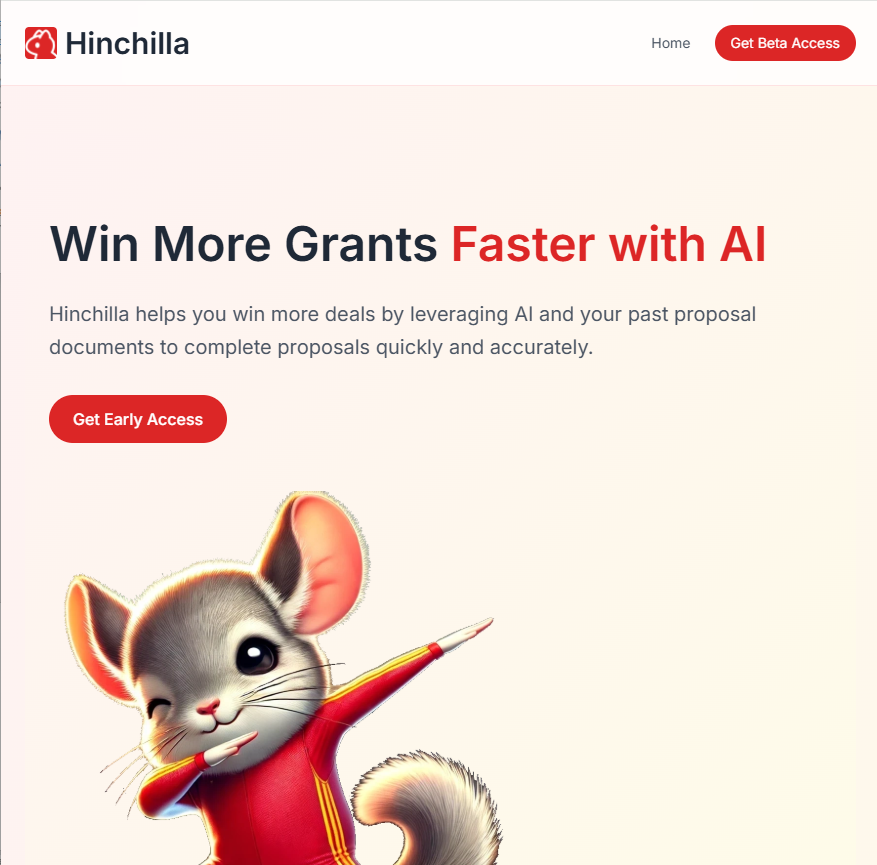
Hinchilla
Hinchilla takes your past grant applications and uses them to generate responses to new grant opportunities. This allows your own successful grant writing to inform and improve your response. It also allows Hinchilla to pull out complex data and information from any document you upload and have it rewritten in a format suitable for your latest grant application. Hinchilla will then proceed to create a draft response for each section of your grant application.
Pricing
Grantable
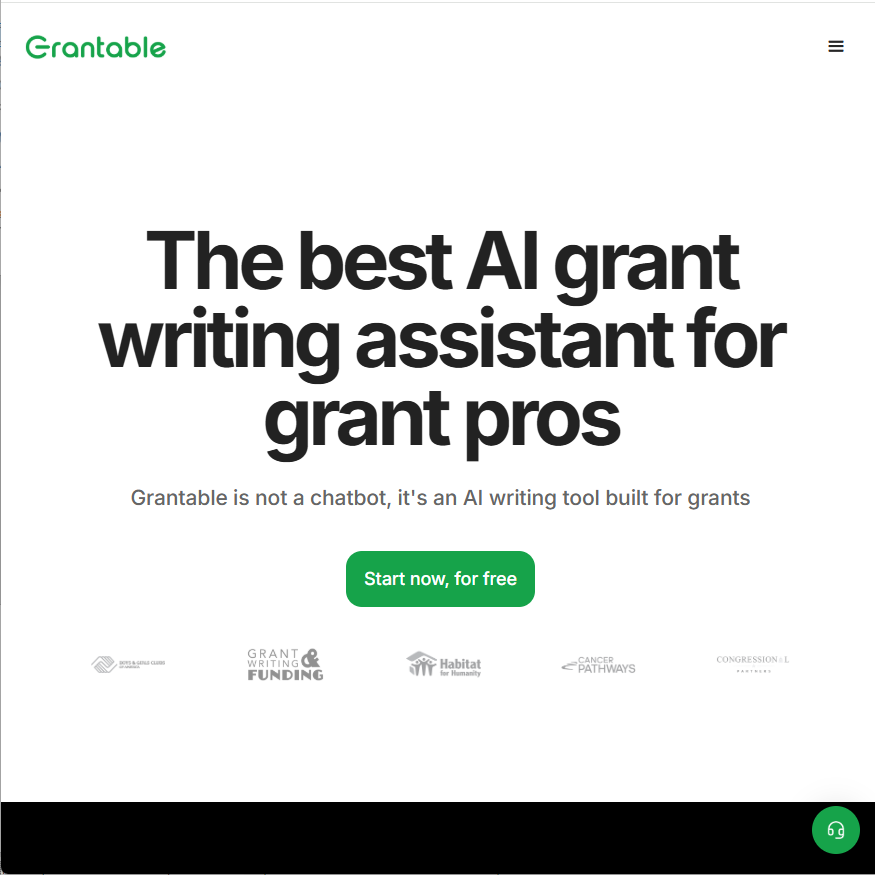
Grantable works in much the same way to Hinchilla. You add a new grant opportunity and then upload your source documents. You can then select what they call "content paletes" for each section of your grant to guide the AI in how it generates your responses, and request drafts for each individual question.
Pricing
$89/month for 3 or more grants
AutoGenAI
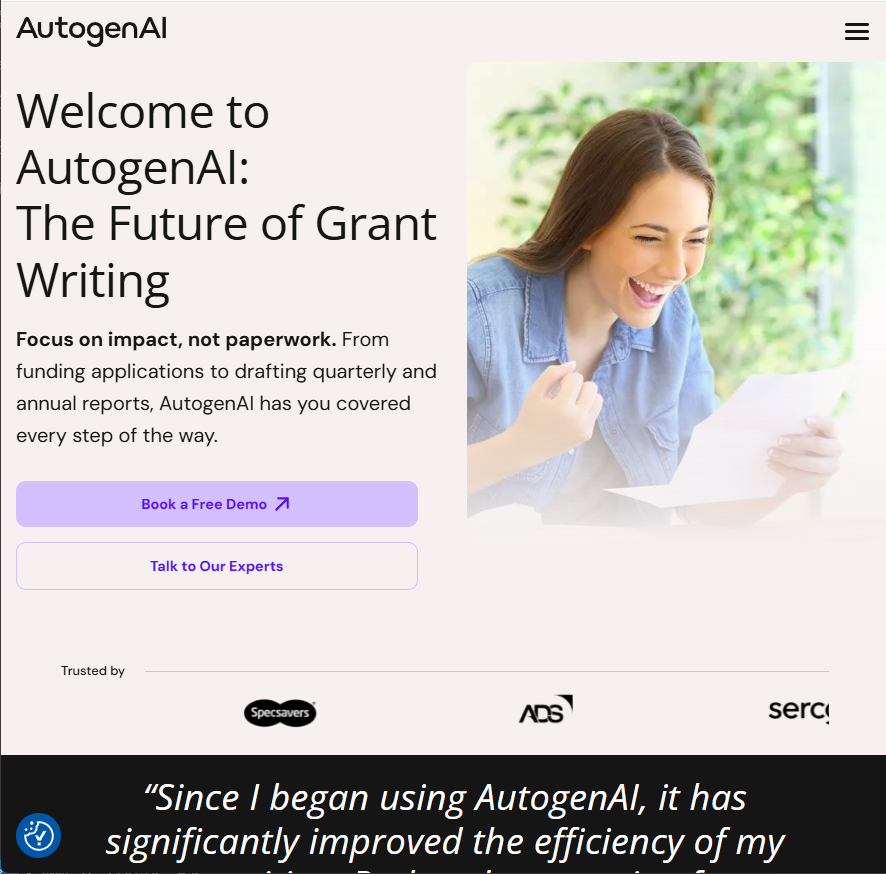
AutoGenAI is focused more on Bids, RFPs and proposals but can handle grant writing tasks as well. If you are a very large organisation and want features to support multi-user collaboration and a more involved grant application process this could be the tool for you.
Pricing
Plinth.io
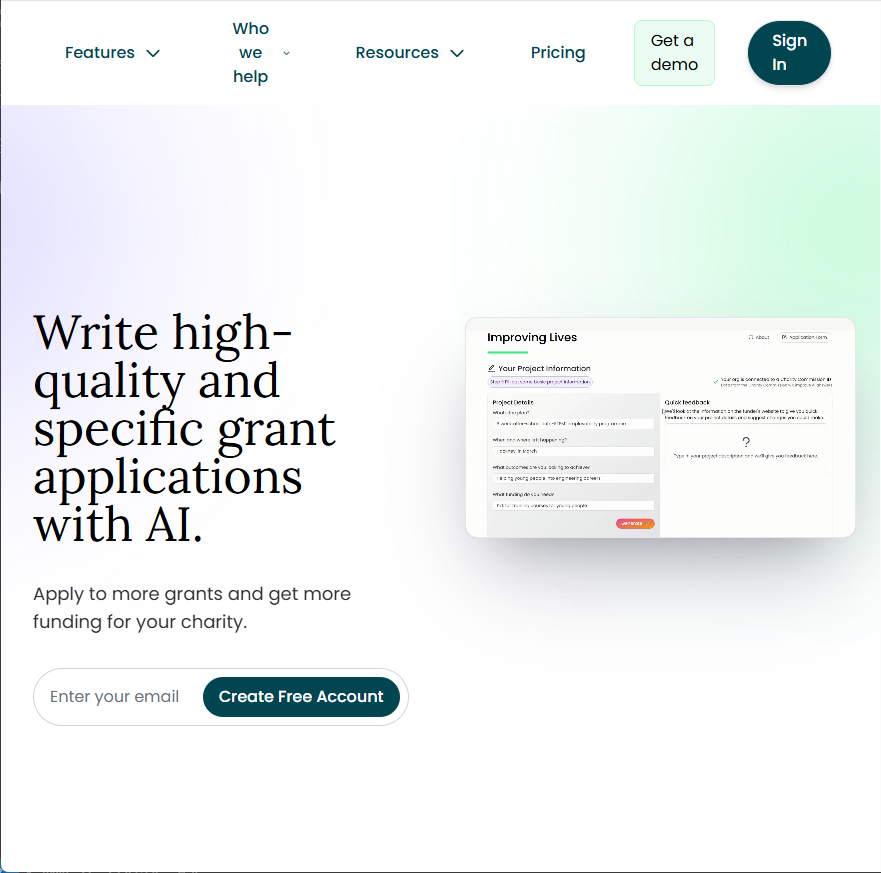
Plinth is a UK based AI-powered platform for grant writers, fundraisers and organisations. Similar to Hinchilla and Grantable it can help drafting responses based on your past grant applications. Their platform covers a lot of other features for grant management (for organisations giving out grants), booking management and etc. Their grant writing tool is sold separately at time of writing.
Pricing
The choice between ChatGPT/Claude and specialized platforms often comes down to your specific needs and budget. General AI tools are great for editing and brainstorming, while specialized platforms excel at leveraging your past grant applications to save significant time on drafting new applications.
Real Results: Time Savings and Quality Improvements
Organizations using AI tools for grant writing are reporting significant benefits:
- Time savings: Many users report cutting their writing time by 60-80% while actually increasing the number of applications they can submit. By reusing past responses and finding relevant sections in seconds you can cut a lot of painful manual work out of the process.
- Quality improvements: By leveraging successful language patterns and ensuring thorough question responses, AI-assisted applications are scoring higher on readability and responsiveness metrics. The humans with the best knowledge to answer a question in your application may not be the ones with the best writing skills. AI can bridge this gap by taking their knowledge and putting it into a well written application.
- Improved consistency: For organizations applying to multiple grants, AI helps maintain consistent branding and messaging across all applications, reinforcing legitimacy.